

This guide covers the stories behind the festival, how different parts of India mark it, and what old texts say about its history. It also has the practical stuff: puja timings for Indore and Bhopal, budget tips, and how to use crackers without hurting anyone. Plus a small childhood memory of paper crackers and phuljharis, from back when Diwali didn’t cost much at all.
Quick Answer: Diwali 2026 falls on Sunday, 8 November 2026. According to Drik Panchang, the Lakshmi Puja (Pradosh Kaal) muhurat is 6:10–8:08 PM in Indore, 6:02–8:01 PM in Bhopal and 5:54–7:50 PM in New Delhi. Diwali celebrates the victory of light over darkness: Rama's return to Ayodhya, Krishna's defeat of Narakasura, the worship of Goddess Lakshmi, Mahavira's nirvana for Jains, and Guru Hargobind's release for Sikhs.
Every year, somewhere around the third week of October or the first week of November, our WhatsApp groups at TravellTech change tone. Trip plans give way to "ghar ja raha hoon" messages, photos of half-painted walls, and arguments about whose mother makes the best gujiya. After more than seven years of leading group trips across India and abroad, we've noticed that Diwali is the one time of year when even the most restless traveller wants to go home first.
So this isn't a sales page. It's the Diwali guide we wish we'd had: what the festival means, where it came from, how India celebrates it differently from state to state, how to keep it joyful without wrecking your bank balance, and how to keep the people (and animals) around you safe.
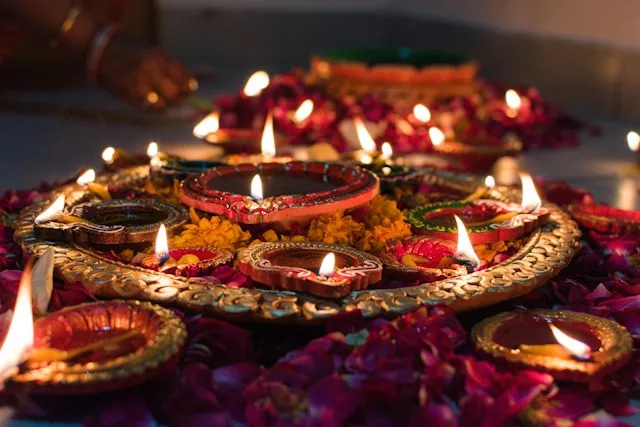
Diwali 2026 Dates: All 5 Days at a Glance
Diwali 2026 runs from Friday, 6 November (Dhanteras) to Wednesday, 11 November (Bhai Dooj), with the main Lakshmi Puja on Sunday, 8 November. This year there's an unusual one-day gap after Diwali: Amavasya continues until 12:31 PM on 9 November, so Govardhan Puja moves to 10 November.
Day | Festival | 2026 date | Key timing (Drik Panchang) |
|---|---|---|---|
1 | Dhanteras (Dhantrayodashi) | Friday, 6 Nov | Puja 6:02–7:57 PM (New Delhi) |
2 | Naraka Chaturdashi / Choti Diwali / Roop Chaudas | Evening of Sat, 7 Nov; abhyang snan at dawn Sun, 8 Nov | Abhyang snan 5:41–6:38 AM, 8 Nov (New Delhi) |
3 | Diwali / Lakshmi Puja | Sunday, 8 Nov | Indore 6:10–8:08 PM · Bhopal 6:02–8:01 PM · Delhi 5:54–7:50 PM · Mumbai 6:27–8:27 PM |
4 | Govardhan Puja / Annakut | Tuesday, 10 Nov | Pratahkala 6:40–8:50 AM (New Delhi) |
5 | Bhai Dooj / Yama Dwitiya | Wednesday, 11 Nov | Aparahna 1:10–3:20 PM (New Delhi) |
Amavasya tithi: 11:27 AM on 8 Nov to 12:31 PM on 9 Nov. Timings vary by city, so check your local panchang or family pandit. Some Madhya Pradesh calendar listings mark Govardhan Puja on 9 Nov; follow your family's tradition.
Why Is Diwali Celebrated?
There isn't just one story behind Diwali, and that's one of the things that makes the festival so special. It falls on the new-moon night of Kartik, but different communities across India celebrate it for different reasons.
For many people, Diwali is about Rama's return to Ayodhya. According to the Ramayana, people lit rows of lamps to welcome Rama, Sita and Lakshmana home after 14 years of exile. The word Deepavali itself means a row of lights.
In parts of South India and Goa, the focus is on Krishna's victory over Narakasura. The story is remembered on Naraka Chaturdashi, when Krishna, often accompanied by Satyabhama in traditional accounts, defeats the demon king and frees his captives.
For many Hindu families, Diwali is also closely connected to Goddess Lakshmi, who is worshipped for prosperity and good fortune. The tradition is linked to the story of Samudra Manthan, the churning of the cosmic ocean, from which Lakshmi emerged. That's also why families clean and decorate their homes, light diyas and sometimes draw little footprints at the entrance to welcome her.
The festival takes a different form in other parts of the country. In Bengal, Odisha and Assam, the new-moon night is associated with Kali Puja. For Jains, Diwali marks the nirvana, or final liberation, of Lord Mahavira, the 24th Tirthankara. Sikhs celebrate Bandi Chhor Divas, remembering Guru Hargobind's release from imprisonment at Gwalior Fort; according to tradition, 52 other kings were released with him. Newar Buddhists in Nepal also observe the occasion with Lakshmi worship.
There is a practical side to the timing, too. Diwali comes around the end of the kharif harvest season, making it a time for families to give thanks, settle accounts and prepare for a fresh start. For many business and trading communities, the festival also marks the beginning of a new financial year. Gujarati families, for example, celebrate Bestu Varas, their New Year, around this time.
So, while the lamps and celebrations may look similar, the meaning behind Diwali isn't exactly the same for everyone. That's part of what makes the festival such a big part of India's cultural life.
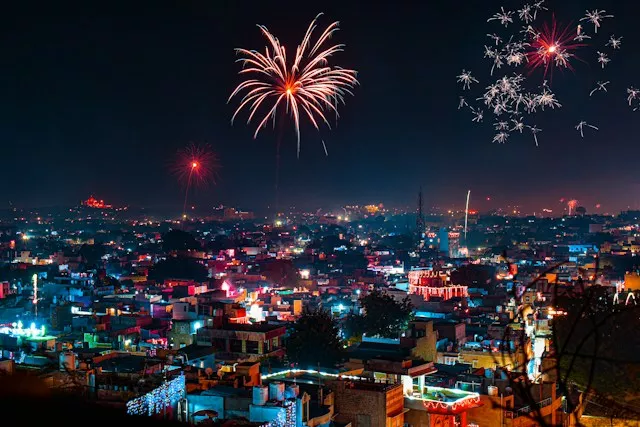
How Is Diwali Celebrated in India?
Across India, Diwali is celebrated over five days by cleaning and decorating homes, drawing rangoli, lighting diyas, buying metal or new items on Dhanteras, performing Lakshmi–Ganesh puja on the new-moon evening, sharing sweets and gifts, bursting crackers, and visiting family. Each region adds its own rituals.
The common rhythm looks like this. The house gets a proper deep clean (and often a fresh coat of paint) in the weeks before. Dhanteras is for buying something new, usually a utensil, coin or jewellery. Choti Diwali starts with an early oil bath (abhyang snan). On Diwali evening, the family does Lakshmi–Ganesh puja during the muhurat. Then come the diyas on every ledge, the jhalars, the mithai, and the crackers. Govardhan Puja brings Annakut, a "mountain of food" offered in gratitude. Bhai Dooj closes the festival with sisters doing tilak for their brothers.
Diwali Across India: Regional Traditions
Region / community | What Diwali means there | Distinctive custom |
|---|---|---|
Ayodhya & North India | Rama's return | Deepotsav on the Saryu ghats; 26,17,215 diyas set a Guinness World Record on 19 Oct 2025 |
Bengal, Odisha, Assam | Kali Puja | Night-long worship of Kali; Bhoot Chaturdashi the night before |
Tamil Nadu & much of the South | Naraka Chaturdashi as the Deepavali | Pre-dawn oil bath, new clothes, crackers at sunrise |
Goa | Narakasura's defeat | Paper effigies of Narakasura filled with grass and crackers, burnt before dawn |
Punjab & Sikhs worldwide | Bandi Chhor Divas | Golden Temple illuminated, Nagar Kirtan, fireworks |
Jains | Mahavira's nirvana | Nirvan Ladoo offered in temples; Jain new year the next day |
Gujarat | End of the old year | Bestu Varas (New Year) and fresh account books (chopda pujan) |
Maharashtra & Karnataka | King Bali's return | Bali Pratipada / Padwa celebrated by couples |
Nepal | Tihar | Five days honouring crows, dogs and cows, ending in Bhai Tika |
Varanasi | Dev Deepawali, "the Diwali of the gods" | Around 25 lakh diyas lit on 84 ghats in 2025 (Curly Tales); Kartik Purnima falls on 24 Nov 2026 |
Why Is Diwali So Special for Indians?
Mostly because of the people. Diwali is the one time of year when almost everyone goes home, or at least tries to. Students take the overnight bus back, married daughters come for Bhai Dooj, and relatives you see once a year are suddenly sitting in your drawing room.
Think about what actually happens in an Indian mohalla in Diwali week. The kaju katli box that arrives from the neighbours goes back with besan laddoos in it. Aunties who haven't spoken since the parking dispute are suddenly on the same rangoli team. The milkman, the security guard and the presswala all get a small packet and a "Happy Diwali" that's slightly more meant than usual. Students take the overnight bus home. Married daughters come back for Bhai Dooj. Business families open new account books with a prayer.
It's also one of the few times when generations celebrate the same way. Your dadi lit diyas on Diwali, your mother did, and you probably will too. That continuity is a big part of why Diwali feels like home even for those of us who spend most of the year on the road.
The History of Diwali: What the Records Actually Say
Diwali is at least 1,300 years old as a recorded festival. The 7th-century play Nagananda, attributed to King Harsha, describes a lamp festival called Dipapratipadutsava. The Padma and Skanda Puranas link lamps to the month of Kartik, and the 11th-century scholar Al-Biruni recorded Hindus celebrating on Kartik's new moon.
Beyond the legends, written records give us a rough timeline:
Padma Purana and Skanda Purana are generally dated to the second half of the first millennium CE, with older cores. The Skanda Purana ties the diyas to the sun and its seasonal change in Kartik.
7th century CE: Harsha's Sanskrit play Nagananda mentions Dipapratipadutsava ("festival of lamps on the first day"), when lamps were lit and newly engaged couples were given gifts.
8th century CE: The Jain Harivamsha Purana by Acharya Jinasena (Shaka year 705) uses the word dipalikaya in connection with Mahavira's nirvana.
Around the 10th century: The poet-critic Rajashekhara's Kavyamimamsa refers to Dipamalika, a "garland of lamps", with homes whitewashed and decorated.
11th century: The Persian scholar Al-Biruni, writing about India, recorded Hindus celebrating Deepavali on the new-moon day of Kartik.
2003: The Nanakshahi calendar formally labelled the Sikh observance Bandi Chhor Divas.
The festival never had a single founding moment. It grew. A harvest-season lamp festival picked up the stories of each community that celebrated it, and that's why so many traditions can claim it.
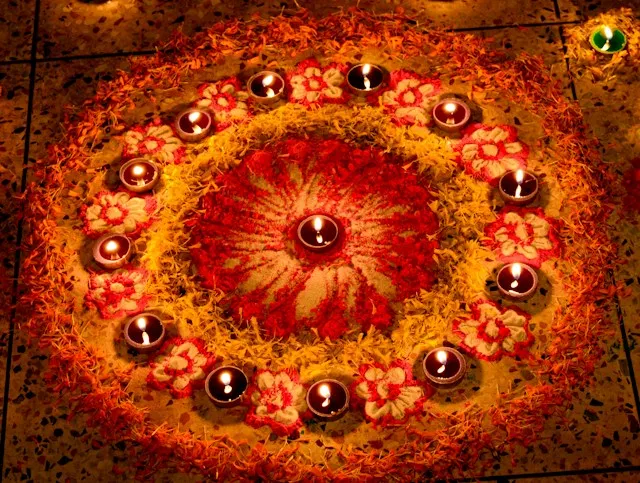
Is Diwali a UNESCO World Heritage?
Yes. Deepavali was inscribed on UNESCO's Representative List of the Intangible Cultural Heritage of Humanity on 10 December 2025, during the 20th session of UNESCO's Intergovernmental Committee held at Delhi's Red Fort. According to the Press Information Bureau, it is the 16th element from India on the list, after nominations such as Durga Puja in Kolkata (2021) and Garba (2023). PIB notes India nominated Deepavali for the 2024–25 cycle. It's the festival itself, not a monument, that's protected: the potters, the diya-makers, the sweet-makers and the families who keep it alive.
How to Make Your Diwali More Special
To make Diwali more special, focus on people and presence rather than purchases. Call the relatives you've drifted from, cook one family recipe together, light diyas by hand, include someone who'd otherwise be alone, and start one small new tradition you can repeat every year.
A few things that work, from our own families and our travelling community:
Revive one family recipe. Ask the oldest person at home to teach everyone one dish, like gujiya, chakli or mawa barfi, and record it on your phone.
Light diyas the old way. Buy clay diyas from a local potter, soak them in water a few hours ahead so they don't absorb all the oil, and light them together.
Do a "thank-you round." Give a sweets box and a few words of real thanks to the people who keep your life running: the guard, the house help, the delivery partner.
Invite someone who's far from home. A hostel student, a new colleague, a neighbour living alone.
Make a gratitude rangoli. Each family member adds one element and says one thing they're thankful for this year.
Plan a post-Diwali day out. Even a one-day family trip to a nearby fort, ghat or waterfall gives everyone something to look forward to after the festival.
Put the phones down during puja. Take photos before and after, but not during.
How to Celebrate Diwali on a Budget Without Losing the Joy
To celebrate Diwali on a budget, set one total spending limit before shopping starts, split it into categories (gifts, sweets, decor, clothes, crackers, travel), buy decor and diyas locally, cap gift amounts by relationship, make sweets at home, and avoid funding the festival on EMIs or BNPL.
There's real money moving around Diwali. According to the Confederation of All India Traders (CAIT), Diwali 2025 sales hit a record ₹6.05 lakh crore, including ₹5.40 lakh crore in goods and ₹65,000 crore in services. That's 25% more than the ₹4.25 lakh crore of 2024. With that much marketing pressure, it's easy for a household to overspend. Here's what helps:
Fix one number first. Decide your total Diwali budget from your actual monthly surplus, not from what "everyone else is doing". Then divide it up, for example: gifts 30%, sweets and food 20%, clothes 20%, decor 10%, puja 5%, crackers 5%, and 10% kept aside for a post-Diwali outing.
Make a gift tier list. Close family, extended family, colleagues and helpers each get a fixed range. It removes the in-store guilt.
Gift experiences or homemade food. A jar of homemade namkeen, a framed family photo, or a planned day trip often means more than a dry-fruit box everyone else is also giving.
Buy local and early. Clay diyas, marigolds, rangoli colours and lanterns from local markets are cheaper and support artisans. Prices usually climb in the last 3–4 days.
Reuse decor. Last year's jhalars and torans plus fresh flowers look just as good.
Skip the BNPL trap. Festive "no-cost EMI" offers make spending feel painless now and painful in January. Use them for planned purchases only.
Pool for crackers and parties. Sharing one supervised neighbourhood display costs less, is safer and is more fun than every family buying its own.
Travel off-peak. Book post-Diwali or Dev Deepawali trips early, and travel in a group. Shared transport and rooms bring the per-person cost down sharply.
My Childhood Diwali: Paper Crackers and Phuljharis
When I think of Diwali, I don't think of the big rockets or the loud bombs. I think of an evening game we played as kids.
There were a bunch of us from the same lane, and every Diwali we'd split into two teams without anyone really organising it. Somebody would just say, "Tum log udhar, hum log idhar," and that was it. Each side had a stash of small paper crackers. They weren't the dangerous kind and had no gunpowder in them; they were small, paper-based things, a bit like the lusan bombs or paper poppers you still see around. You threw one, it hit the ground or someone's shoulder with a tiny pop, and that was the whole thrill.
And we threw them at each other's team like it was the most serious war in history. Ducking behind a parked scooter, running out of "ammunition", trying to sneak one past the other side's tallest kid. Nobody kept score properly, so every year both teams claimed they'd won. I remember the laughter more than the noise, and I remember the smell of paper and the slightly scorched-sugar smell of the street on Diwali night.
When the paper crackers ran out, the phuljharis came out. We'd stand in a little circle, light our sparklers from one shared diya, and draw circles and our names in the air. Everyone tried to write the longest name before the sparkler died, and the kid with the shortest name always won.
Those were not expensive Diwalis. What made them special was that everyone was outside, together, at the same time. I think about that a lot when we plan group trips at TravellTech. People don't remember the price of the hotel. They remember who was standing next to them in the circle.
(A grown-up footnote: those were harmless paper poppers. Please don't let kids throw anything that contains gunpowder, at anyone, ever.)
Responsible Firecracker Use: Rules and Safety Tips
Use firecrackers in limited numbers and only green crackers, because conventional crackers sharply worsen air quality and cause hundreds of burn injuries every Diwali. Buy CSIR-NEERI-certified crackers from licensed sellers, follow local timing rules, keep kids supervised with water nearby, and stay far from animals and elderly or asthmatic neighbours.
We aren't anti-cracker; that phuljhari circle is one of my happiest memories. But the numbers are hard to ignore:
Air quality: The Central Pollution Control Board reported Delhi's 24-hour average AQI on Diwali 2025 at 345 ("very poor"), rising to 351 the next day. An analysis of CPCB data by Climate Trends found PM2.5 peaked at 675 µg/m³ late on Diwali night.
Burn injuries: On Diwali 2025, Safdarjung Hospital, which has India's largest burns unit, reported 129 burn cases, 118 of them from firecrackers and 11 from diyas. AIIMS New Delhi received 55 Diwali-related burn cases in 48 hours, and 10 patients needed ICU care.
The surprising culprit: A five-year study in the Indian Journal of Burns (GMCH Guwahati, 2016–2020) found that the fountain (anar) was the most common cracker causing injuries (38%), and 46.2% of patients were under 19.
What the rules say
Green crackers only: Since the Supreme Court's 2018 Arjun Gopal judgment, only reduced-emission ("green") crackers sold by licensed traders are allowed, and online sale is banned. According to CSIR-NEERI, its green crackers, sold under names such as SWAS (Safe Water Releaser), STAR (Safe Thermite Cracker) and SAFAL (Safe Minimal Aluminium), are designed to reduce particulate matter emissions by at least 30%; Down To Earth reported reductions of 30–35% for SWAS and 35–40% for SAFAL and STAR. Look for the CSIR-NEERI green logo and a QR code on the box. Remember they're less polluting, not non-polluting.
Noise limit: Under the Environment (Protection) Rules, 1986, crackers louder than 125 dB(AI) or 145 dB(C)pk at 4 metres from the bursting point are prohibited. For joined (series) crackers the limit is lower.
Timings: On 15 October 2025, the Supreme Court allowed green crackers in Delhi-NCR from 18 to 21 October, limited to 6–7 AM and 8–10 PM. Many other states have followed an 8–10 PM Diwali window in past years. 2026 orders are issued locally, so check your district collector's or police commissioner's notification for Indore, Bhopal or your city.
Practical safety tips
Light crackers in an open space, away from cars, dry leaves, curtains and balconies.
Keep a bucket of water and a bucket of sand within arm's reach.
Wear cotton clothes; avoid loose dupattas and synthetic fabrics.
Use a long agarbatti or phuljhari to light, and stand at arm's length.
Never re-light a dud. Wait, then soak it in water.
Anars and chakris need an adult. The data shows fountains injure more people than you'd expect.
Never hold a cracker in your hand or put it in a tin or bottle.
Kids should only use sparklers, and only under supervision. Drop finished sparkler wires into water.
For burns, cool the area under running water for 15–20 minutes, never apply toothpaste, ice or butter, and see a doctor for anything larger than a palm or on the face or hands.
Bring pets indoors, close windows, play soft music, and never tie crackers to animals. Check on elderly, asthmatic and newborn neighbours.
Keep diyas away from curtains, and never leave them unattended where kids or pets can knock them over. Diyas caused 11 of Safdarjung's 129 burn cases.
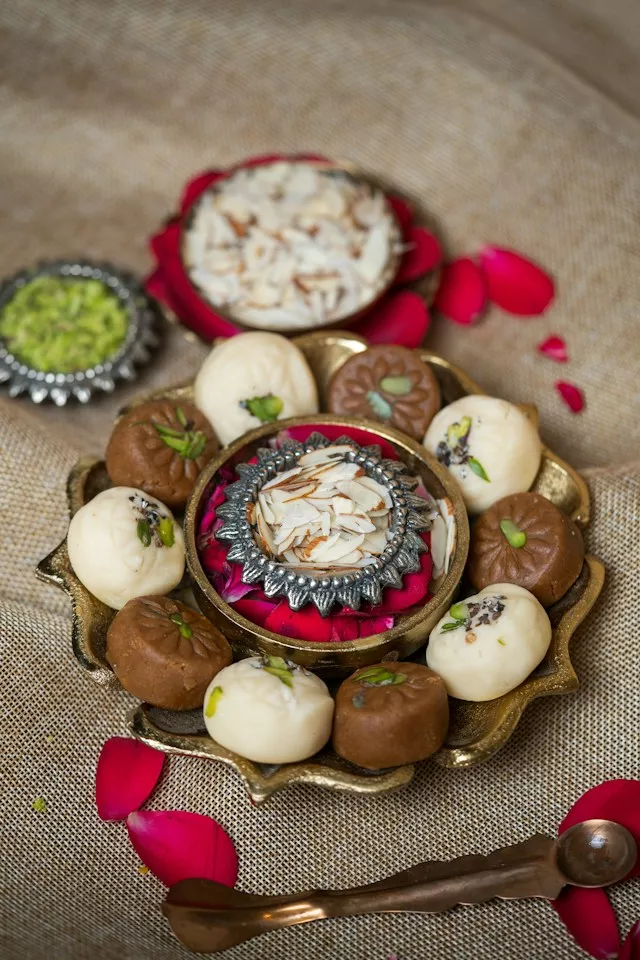
Diwali 2026 Travel and Safety Checklist
If you're travelling home or on a trip around Diwali 2026, book early, carry essentials and plan around the 8 November puja.
Book post-Diwali trips (10–30 November) now; Dev Deepawali boats and Varanasi hotels fill early.
If you're driving on Diwali night, finish your drive before dusk. Roads get crowded and visibility drops with smoke.
Carry N95 masks if anyone in the group is asthmatic or elderly.
Keep digital copies of IDs; hotels in pilgrimage towns check strictly during festivals.
Fix family video-call times for anyone who can't come home.
Tell your bank you're travelling and set UPI limits; festive season brings more payment scams.
Emergency numbers: 112 (all emergencies), 101 (fire), 108 (ambulance in most states).
Where to Travel After Diwali 2026
Diwali is one of those festivals that feels best when you can celebrate it with your family. If you're planning a trip, consider travelling a few days later instead. You can avoid some of the festive rush, enjoy a change of scenery and make the most of November's pleasant weather.
Diwali week is also a busy time for travel, which can mean higher hotel prices and limited train availability. Indian Railways reduced its advance reservation period from 120 days to 60 days from 1 November 2024, so planning ahead is important.
If you're thinking about a getaway after Diwali, here are a few ideas worth considering:
Dev Deepawali in Varanasi: Scheduled for 24 November 2026, Dev Deepawali is celebrated on Kartik Purnima, around 15 days after Diwali. The ghats of Varanasi come alive with rows of lamps and evening celebrations. It's a memorable experience, but expect crowds and book your stay well in advance. Check the date and local arrangements before making your plans.
A Mahakal–Narmada road trip: If you're travelling from Indore or Bhopal, Ujjain, Omkareshwar and Maheshwar can make a good 2–3 day trip. You can visit the temples, spend time by the Narmada and enjoy a slower pace after the festival.
A November trek: If you prefer mountains to crowded cities, consider a trek in early winter. Many routes offer clear skies and refreshing weather after the monsoon, although conditions vary by destination and altitude.
A winter holiday abroad: Dubai, Thailand, Vietnam and Bali are worth considering for a late-November getaway. Compare flight prices, local weather and visa requirements before choosing your destination.
A team getaway: Instead of organising only a festive dinner at work, plan a short one- or two-night trip with your colleagues. Spending time together outside the office can be a welcome change from the usual routine.
A trip as a gift: If your parents keep saying they don't need anything, consider gifting them a weekend getaway or a pilgrimage they've wanted to take. Choose a destination and pace that suit their comfort and travel preferences.
If you'd like to plan a Diwali getaway without the hassle of managing every detail yourself, TravelTech can help you organise a trip around your preferences. From choosing a destination to coordinating stays, transport and the itinerary, we aim to make planning simpler so you can focus on enjoying the experience with your family or friends. Get in touch with our team to discuss your travel plans and explore an option that works for you.
At the end of the day, a memorable trip doesn't have to be expensive or far from home. Sometimes, it's simply about spending time with people you don't get to see often, discovering somewhere new and coming back with stories to share.
If you enjoy exploring India’s festive traditions, read our Dussehra guide to discover how different states celebrate the festival in their own unique ways.
728 × 90 — Leaderboard
❓ Frequently Asked Questions
When is Diwali in 2026?
What is the Lakshmi Puja muhurat in Indore and Bhopal on Diwali 2026?
Why is Diwali celebrated?
Why is Govardhan Puja on 10 November and not the day after Diwali in 2026?
Is Diwali on UNESCO's heritage list?
What are green crackers and how do I identify them?
When is Dev Deepawali in Varanasi in 2026?
📚 Related Guides
More Travel Stories
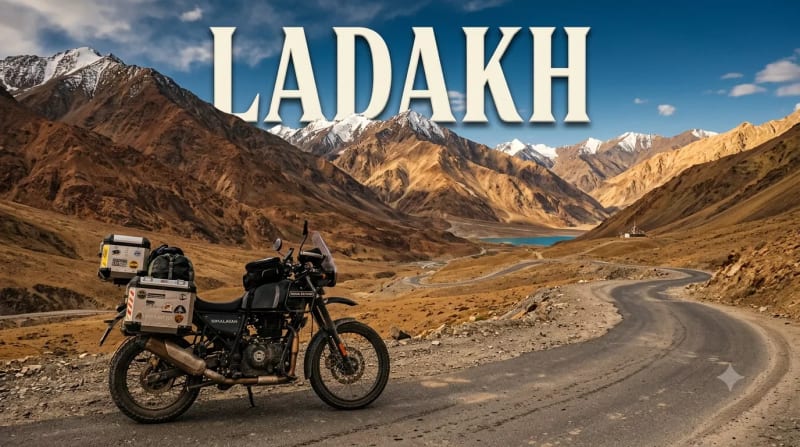
Ladakh Travel Guide: Places, Itinerary & Cost
Plan your Ladakh trip with the best places to visit, ideal travel season, itineraries, travel costs, local food and essential high-altitude travel tips.
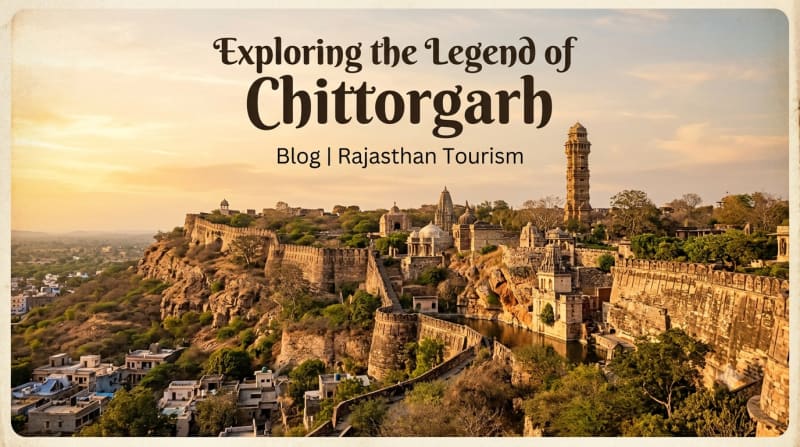
Chittorgarh Fort: History, Three Sieges, Vijay Stambh, Padmini Palace & Visitor Guide
Chittorgarh Fort explained: Mewar history, three famous sieges, Vijay Stambh, Rana Kumbha Palace, Meera Temple, Gaumukh Kund, timings, tickets and tips.
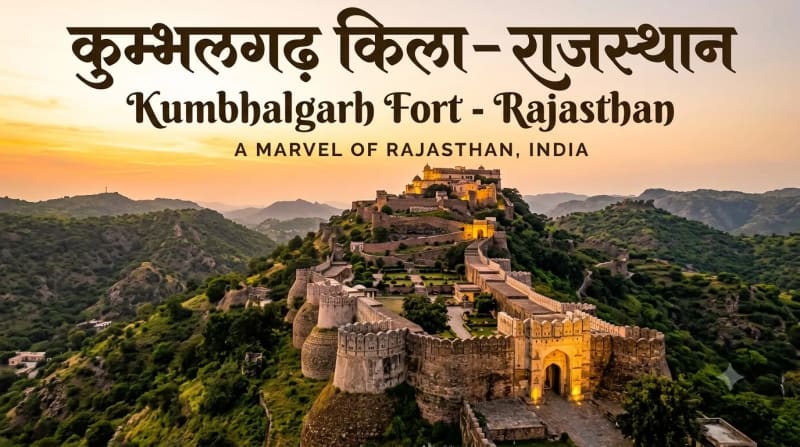
Kumbhalgarh Fort: History, 7 Gates, Temples, Badal Mahal & Complete Visitor Guide
Kumbhalgarh Fort explained using ASI information boards: Rana Kumbha's history, seven gates, Neelkanth and Parsvanatha temples, Badal Mahal and visit tips.