
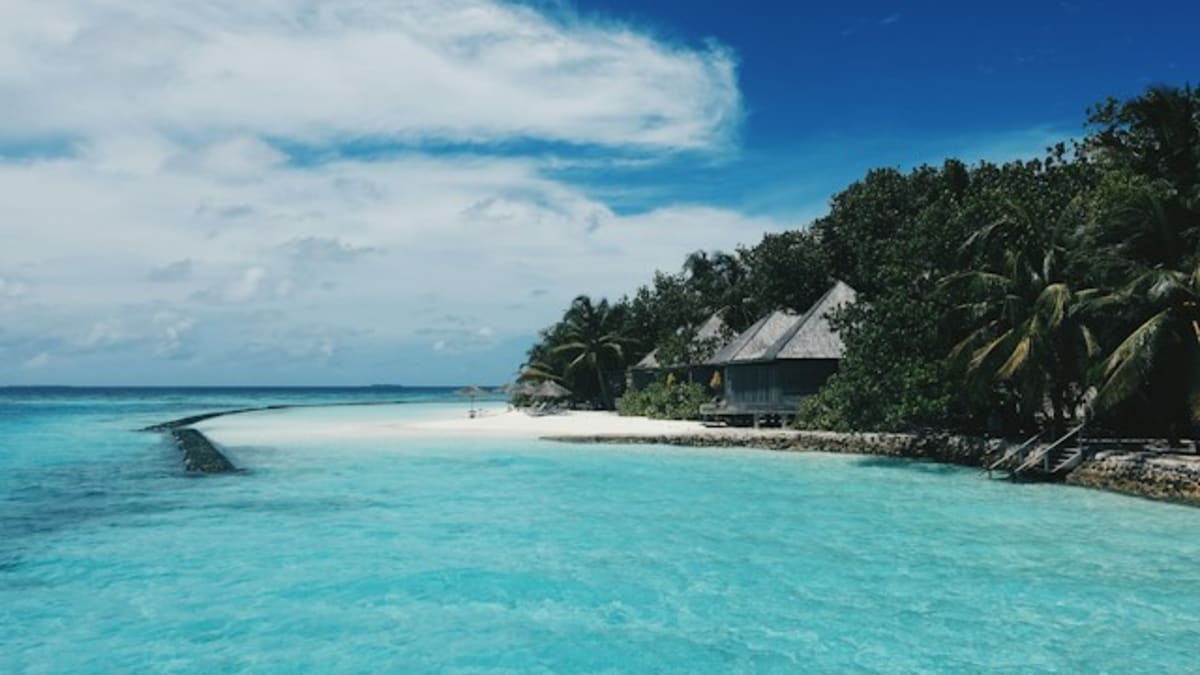
Maldives trip from India, Maldives tour package, best time to visit Maldives, Maldives itinerary, Maldives visa for Indians
A Country That's Mostly Water, and Fine With That
The Maldives is technically over 1,190 coral islands spread across 26 atolls in the Indian Ocean, and the country's entire tourism model is built around a fairly unusual idea: one resort, one island, no other resorts crowding the view. That model is why a Maldives holiday feels so different from almost any other beach destination. There's no strip of competing hotels and no crowded public beach, just your resort's stretch of sand and the reef beyond it.
It's also, quietly, one of the lowest-lying and most climate-vulnerable nations on Earth. That adds a strange undercurrent to a place otherwise built around leisure, and it's one reason many resorts have leaned into sustainability and reef conservation, some funding coral restoration directly through guest stays.
For Indian couples, the Maldives has become close to the default answer to "where should we go for our honeymoon." The flight is short, the visa is free on arrival, and there are direct flights from several Indian cities. It's also one of the few premium international destinations where the whole trip fits into 5–6 days.
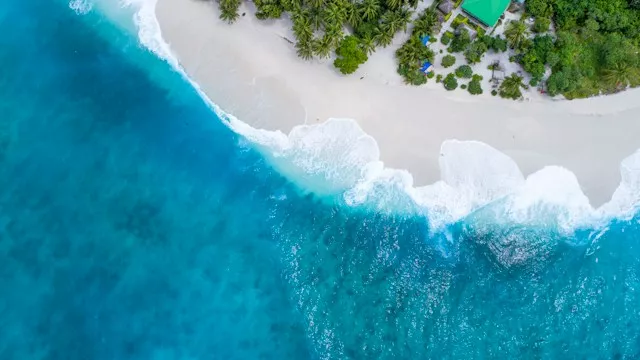
What You're Actually Going to See (and Do)
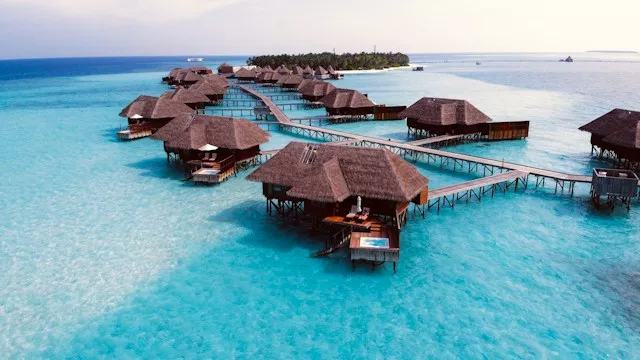
There isn't a "sightseeing circuit" in the Maldives the way there is elsewhere. The destination is the resort itself, and the appeal is almost entirely experiential: overwater villas with direct lagoon access via a private deck and ladder, house reef snorkelling that in many resorts rivals dedicated dive sites elsewhere, sunset dolphin cruises, and candlelit dinners on a private sandbank arranged specifically for the occasion.
For travellers wanting more than relaxation, scuba diving is genuinely world-class here, with visibility often exceeding 30 metres and manta ray and whale shark encounters possible at the right sites and season. Many resorts run PADI-certified dive centres on-site. If you plan to dive, remember the standard safety guidance is to avoid flying for at least 12–24 hours after your last dive. Schedule your final dive accordingly, and ask the dive centre for its exact rule.
Local-island guesthouse stays (Maafushi is the most popular) offer a budget-friendlier, more culturally grounded alternative to the resort model. They come with real differences, covered in the resort-vs-local-island comparison below.
Best Time to Visit the Maldives
November to April (dry season) is the classic window, with calm seas, minimal rain, and the best conditions for lounging and diving. It also overlaps with peak season, so prices run higher and villas book out earlier. Within that window, the year-end holidays (Christmas to New Year) are typically the most expensive and hardest to book.
May to October (wet season/monsoon) brings more rain and choppier seas but noticeably lower resort prices. Divers often prefer this window for manta ray sightings at certain sites, and Hanifaru Bay in Baa Atoll is the best-known example. Manta and whale shark seasons shift by atoll, so confirm timing with the resort's dive centre before booking around them.
Two things worth knowing before you pick dates:
"Dry season" isn't a guarantee. Showers and cloudy spells can happen in any month, and weather also varies by atoll. Build one flexible buffer day into your plan instead of scheduling every experience for a fixed day.
Indian holiday demand shapes prices as much as weather does. Diwali, Christmas–New Year, and the May–June school holidays are when Indian travellers book the most, so prices and availability tighten. If your dates are flexible, the weeks just before or after these peaks are often easier on both budget and availability.
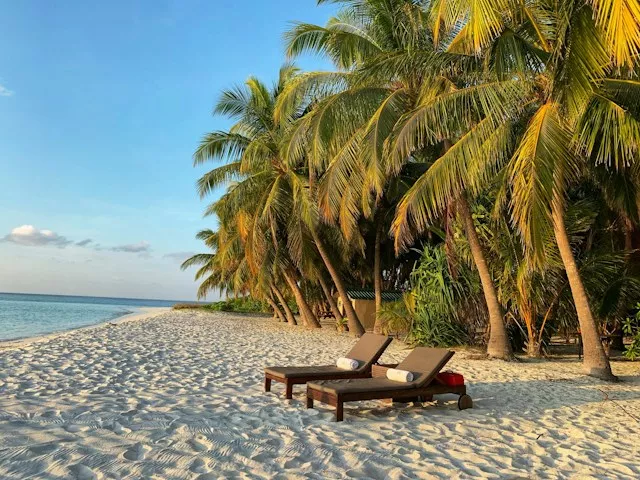
How to Reach the Maldives
Visa and Entry Requirements for Maldives
Indian passport holders receive a free 30-day visa on arrival, with no advance application needed. Carry the following, because immigration can ask for any of them:
A valid passport. The official requirement is at least 1 month of validity, but we recommend 6 months as the safe standard, since airlines and future plans often expect it.
A confirmed return or onward ticket
Proof of your resort or hotel booking
You'll also need to complete the online traveller declaration (IMUGA) within 96 hours before you arrive. Keep a screenshot and a printout handy. The departure declaration was abolished in August 2024, so the form is now required only for arrival.
Time difference: the Maldives is 30 minutes behind India (UTC+5 vs UTC+5:30). It sounds trivial, but it matters when you're timing a seaplane check-in or a spa booking.
Direct flights connect several Indian cities to Malé, including Delhi, Mumbai, Bengaluru, and Kochi, with flight times of roughly 2.5–3 hours from the south and west and around 4–5 hours from Delhi. Airlines such as Air India and IndiGo serve these routes. Schedules change by season, so check current direct-flight availability for your city instead of assuming daily service.
From Malé, your resort's location decides everything about the first day:
Speedboat is used for resorts in the nearby atolls. Transfers are short and can run at most hours of the day.
Seaplane is used for farther atolls. Seaplanes fly only in daylight, and each resort has a cut-off time for the last transfer.
Domestic flight plus boat is used for some far-flung resorts and islands.
The rule to plan around: if your international flight lands late in the afternoon or evening, a seaplane-only resort may not be reachable that day. That usually means an overnight in Malé or Hulhumalé, or choosing a speedboat resort. Ask the resort for its last transfer time before you book your flight, not after.
Seaplanes have strict baggage limits. Trans Maldivian Airways, the main seaplane operator, allows a combined 25 kg (20 kg checked plus 5 kg hand luggage), and excess baggage is charged per kilogram. Confirm the allowance with your resort, especially if you're carrying a camera kit or dive gear.
From Indore: connect via Delhi, Mumbai, or Bangalore to Malé. TravelTech's Maldives packages coordinate the connecting flight and resort transfer as one booking. When choosing connections, leave a comfortable layover buffer. A missed connection near a seaplane cut-off costs you a night.
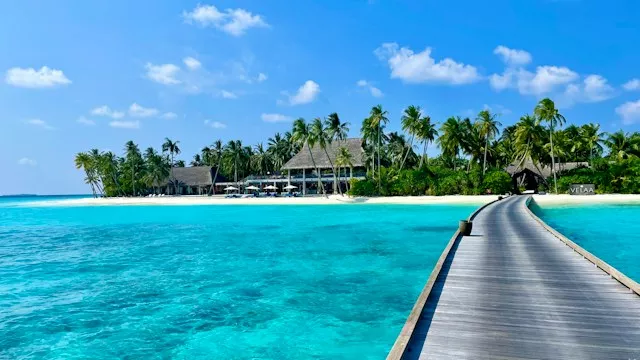
Money and Practical Bits
The local currency is the Maldivian Rufiyaa (MVR), but US Dollars are widely accepted at resorts, and most transactions run on a room-charge system settled at checkout. Cards are accepted virtually everywhere at resort properties.
If you plan to spend time on a local island, carry some cash. ATMs and card acceptance are far patchier outside resorts and Malé. Tell your bank you're travelling, and check the international usage limits on your card before you go.
A few small things worth sorting before departure:
Phone connectivity: compare your Indian operator's international roaming pack with a travel eSIM. Resort Wi-Fi is usually available but varies by property.
Food preferences: if you're vegetarian, Jain, or eat halal, tell the resort at booking, not at check-in. Most resorts can cater to it, but advance notice makes it smoother.
Customs: alcohol, pork products, and material considered contrary to Islamic norms are restricted, and drones generally need prior permission. Vapes and e-cigarettes are completely banned. Since November 2024, import, sale, and use are all prohibited, so leave them at home. If you carry prescription medicines, keep them in original packaging with the prescription. Check the official customs site for current rules before you pack.
Roughly What It Costs
The Maldives sits at the premium end of the spectrum, driven almost entirely by resort choice. An overwater villa at a well-known international resort brand can cost several times what a beach villa at a mid-range property does, and both sit well above a local-island guesthouse. Flights and the visa are minor costs by comparison. Your budget actually goes to the resort, the meal plan, the transfers, and optional excursions like private sandbank dinners or dive packages.
Why the quoted rate isn't the final rate. Resort prices are usually quoted before taxes, and the additions are significant:
Service charge: typically 10%
Tourism GST (TGST): 17% on tourism services (raised from 16% in July 2025)
Green Tax: a flat per-person, per-night charge, currently USD 12 at resorts and USD 6 at smaller guesthouses. Children under 2 are exempt, but children 2 and over pay.
As a simple illustration, if a villa were quoted at USD 400 per night, the service charge adds USD 40, and 17% TGST on the combined USD 440 adds USD 74.80. That's USD 514.80 per night before the Green Tax. Always ask for the all-inclusive, per-night figure.
Meal plans decide more of your budget than most people expect. These are the common options:
Plan | What it typically covers | Best for |
|---|---|---|
Bed & Breakfast | Room + breakfast | Couples who plan to eat out or explore |
Half Board | Breakfast + dinner | Most first-time couples |
Full Board | Breakfast, lunch, dinner | Couples who don't want to think about food |
All-Inclusive | Full board + selected drinks and often some activities | Couples who drink and want a fixed budget |
Inclusions vary by resort, so read what "all-inclusive" covers at that property. Non-drinkers may not get value from an all-inclusive premium, so do the maths before upgrading. Resort à la carte meals and drinks are priced well above mainland norms, so when you compare options, count the total spend on food and drinks, not just the room rate.
Off-peak monsoon-season travel (May–October) remains the single most effective way to lower the cost of an otherwise premium trip without sacrificing much of the experience.
What to Eat
Garudhiya (a clear, fragrant Maldivian fish soup, the closest thing to a national dish) and mas huni (a traditional breakfast of shredded tuna, coconut, onion, and chilli, eaten with flatbread) are the two to try. Fresh-caught tuna appears prepared several different ways across a stay, and the coconut-based curries reflect the islands' South Indian and Sri Lankan culinary influences. Most resorts also run extensive international buffets and à la carte menus, so even less adventurous eaters are well catered for.
Where to Stay
Overwater villas offer the classic Maldives experience and the best photographs. Beach villas are a slightly more affordable alternative with direct sand access, and are usually more spacious with private gardens. Local-island guesthouses suit travellers prioritising budget and a more authentic, less resort-bubble experience.
If you're deciding between the first two, these are the practical differences:
Beach villa | Overwater villa | |
|---|---|---|
Privacy | Garden and beach, often more enclosed | Open water views, jetty-connected |
Reef/snorkelling access | Walk in from the sand | Ladder straight into the lagoon |
Families with young children | Usually more comfortable | Check railings, ladders, and age policies |
Price | Lower | Usually a premium |
Two questions worth asking the resort: where the house reef actually sits relative to your villa (it isn't always where the villa is), and which direction the villa faces. Orientation decides whether you get sunrise or sunset from your deck.
Resort or local island?
Resort | Local island guesthouse | |
|---|---|---|
Alcohol | Available | Not available |
Beachwear | Anywhere on the island | Designated "bikini beach" areas; modest dress elsewhere |
Getting around | Resort arranges transfers | Public ferries or speedboats, often on limited schedules |
Food | Resort dining, wide choice | Often set meals or a few local cafés |
Cost | Highest | Considerably lower |
Hybrid option: some travellers split their trip, starting on a local island and finishing at a resort. This gives you both experiences, but it adds a transfer, so it suits longer stays better than a 4-night trip.
Maldives for Honeymoon: What You Should Know
If you're planning your honeymoon, Maldives is one of those places where you don't need to keep moving from one place to another. You can stay at one good resort, spend your days by the beach or in the water, and actually take some time to relax together.
For most couples, 4–5 nights is a good starting point. If your resort is in a far-off atoll and you need a seaplane or domestic flight to reach it, don't make the stay too short. A lot of your first and last day can go into transfers.
If You Prefer Luxury, Look at 5-Star Premium Resorts
If you want a more luxurious honeymoon, a 5-star premium resort is worth looking at. You can find packages around ₹90,000 per person, but the price can change depending on your travel dates, resort, number of nights, villa type, transfers and what's included in the package.
A good package can include breakfast, lunch, dinner and 2–3 activities. If you choose a more premium package, you may also get a private pool, selected water activities, drinks or alcohol and other resort experiences. It really depends on the resort and the package.
One thing I would suggest is not comparing resorts only on the room price. A package that looks cheaper at first can become expensive once you add meals, transfers and activities separately.
If you book through TravelTech or another travel company, another big advantage is that you don't have to manage everything separately. Resort, transfers, activities and other arrangements can be planned together, which can sometimes bring the overall cost down and makes the trip much more hassle-free.
Beach Villa or Overwater Villa?
This is probably one of the first decisions you'll make when booking a Maldives honeymoon.
An overwater villa gives you that classic Maldives experience — wake up to the lagoon outside your room, step onto your private deck and get directly into the water.
A beach villa gives you more direct access to the sand and often a little more greenery and privacy around the room. It can also be noticeably cheaper than an overwater villa.
If your budget allows, a private pool villa is another option, especially if privacy is important to you. But don't assume that a more expensive villa automatically means a better experience. Check the villa's location, view, privacy and access to the house reef before paying the premium.
What Should You Check in a Honeymoon Package?
Before booking, ask the resort or travel company exactly what your package includes. This can make a big difference to the final cost.
Check whether it includes:
Breakfast, lunch and dinner
Resort transfers
2–3 activities
Honeymoon room decoration
Romantic dinner or sunset experience
Water sports or snorkelling
Spa treatment
Private pool villa, if applicable
Drinks or alcohol
Taxes and service charges
The Maldives can look expensive at first, but a package with the right inclusions can actually make budgeting much easier. The important part is to compare the complete trip cost, not just the room rate.
TravelTech's Sample Maldives Itinerary
Day 1 – Arrival & Resort Transfer. Land in Malé, then take a speedboat or seaplane transfer to your resort, timed to your resort's last-transfer cut-off. Evening at leisure.
Day 2 – Snorkelling & House Reef. Morning snorkel on the house reef, then an afternoon by the pool or beach.
Day 3 – Dolphin Cruise & Sandbank Dinner. A sunset dolphin-spotting cruise, followed by a private candlelit dinner on a sandbank. Dolphin sightings are common but never guaranteed.
Day 4 – Optional Diving or Water Sports. A dedicated dive session for certified divers, or jet-skiing and kayaking for others. Keep your final dive at least 12–24 hours before your flight.
Day 5 – Departure. Transfer back to Malé for your onward flight, allowing generous time for the seaplane or speedboat leg.
Note: Days 1 and 5 are largely travel days, which is why we suggest at least 4–5 nights for farther atolls
Common Mistakes We See When Planning Maldives Trips
Not confirming taxes and transfer costs upfront. Service charge, TGST, Green Tax, and transfers are sometimes quoted separately from the headline resort price. Always ask for the fully inclusive per-night cost, including seaplane or speedboat transfers, before comparing resorts.
Booking a flight before checking the transfer cut-off. Seaplanes fly only in daylight. A late arrival can mean an unplanned night in Malé, so get the resort's last-transfer time first.
Booking too short a stay for a far-atoll resort. Seaplane transfers can eat up half a travel day each way. A 3-night stay at a distant atoll can feel rushed, and 4–5 nights minimum is a better fit.
Assuming all resorts allow alcohol. Only resort islands serve alcohol under Maldivian law. Local-island guesthouses, including popular budget options like Maafushi, do not.
Packing too heavy for a seaplane. Baggage limits on seaplanes are strict, so check the allowance before you pack.
Underestimating sun exposure. Water intensifies the sun even on overcast days. Reef-safe sunscreen (better for the coral you're likely there to snorkel around) and regular reapplication are worth planning for.
Not booking water villas early enough. The most photogenic overwater villas at popular resorts book out months ahead, particularly for November–April and around Indian holiday peaks.
Packing a vape or e-cigarette. The Maldives banned these in late 2024, and they can be confiscated at customs. Leave them at home.
The Maldives isn't a place you explore so much as a place you stop moving in. Let TravelTech handle the resort selection, transfers, and honeymoon extras; you handle deciding whether to leave the villa at all.
Planning Your Maldives Trip With TravelTech
Planning a Maldives trip can get confusing when you have to coordinate flights, resort transfers, meals, activities and room options separately. That's where we try to make things easier.
With TravelTech, you have direct support from our team throughout your trip. If something goes wrong or you need help with your booking, you don't have to keep going through different third parties or figure everything out on your own. You can contact us directly, and we'll help you sort it out.
We also understand that not everyone wants the same Maldives trip. You may want a simple beach stay, a luxury 5-star resort, a private pool villa, more activities or simply a package that stays within your budget. We can help customise the plan around what actually matters to you instead of putting you into a fixed package.
For honeymoon couples, we can also customise the package with romantic experiences, premium room categories, private pool villas, special dinners and other honeymoon add-ons, depending on the resort and availability.
The idea is simple: you enjoy the trip, and we handle the planning and coordination behind it.
Need help planning your Maldives trip?
Talk to the TravelTech Team →
Explore TravelTech's Maldives Packages
TravelTech's Maldives tour packages start from around ₹54,999 per person, covering 4–6 nights at verified resort properties. It's one of our most requested honeymoon and anniversary trip categories.
👉 Browse TravelTech's Maldives Tour Packages — current resort options, batches, and pricing.
👉 Explore all International Tour Packages to compare against other beach destinations.
👉 Message us on WhatsApp for current resort options, pricing, and honeymoon extras.
👉Planning an affordable international trip? Check out our guide to
728 × 90 — Leaderboard
❓ Frequently Asked Questions
Do Indians need a visa for the Maldives?
What is the Maldives Green Tax?
How many days do I need in the Maldives?
Is the Maldives expensive?
Is the Maldives only for honeymooners?
Which is better — an overwater villa or a beach villa?
Is the Maldives safe for solo female travellers?
Can I drink alcohol in the Maldives?
Do I need travel insurance for a Maldives trip?
Is the Maldives a good destination for a babymoon or family trip?
📚 Related Guides
More Travel Stories

Chittorgarh Fort: History, Three Sieges, Vijay Stambh, Padmini Palace & Visitor Guide
Chittorgarh Fort explained: Mewar history, three famous sieges, Vijay Stambh, Rana Kumbha Palace, Meera Temple, Gaumukh Kund, timings, tickets and tips.

Kumbhalgarh Fort: History, 7 Gates, Temples, Badal Mahal & Complete Visitor Guide
Kumbhalgarh Fort explained using ASI information boards: Rana Kumbha's history, seven gates, Neelkanth and Parsvanatha temples, Badal Mahal and visit tips.

Ranakpur Jain Temple: History, 1,444 Pillars, Architecture, Timings & Visitor Guide
Ranakpur Jain Temple explained: Dharna Shah's dream, Rana Kumbha's role, the 1,444 pillars, architecture, timings, dress code and how to plan your visit.